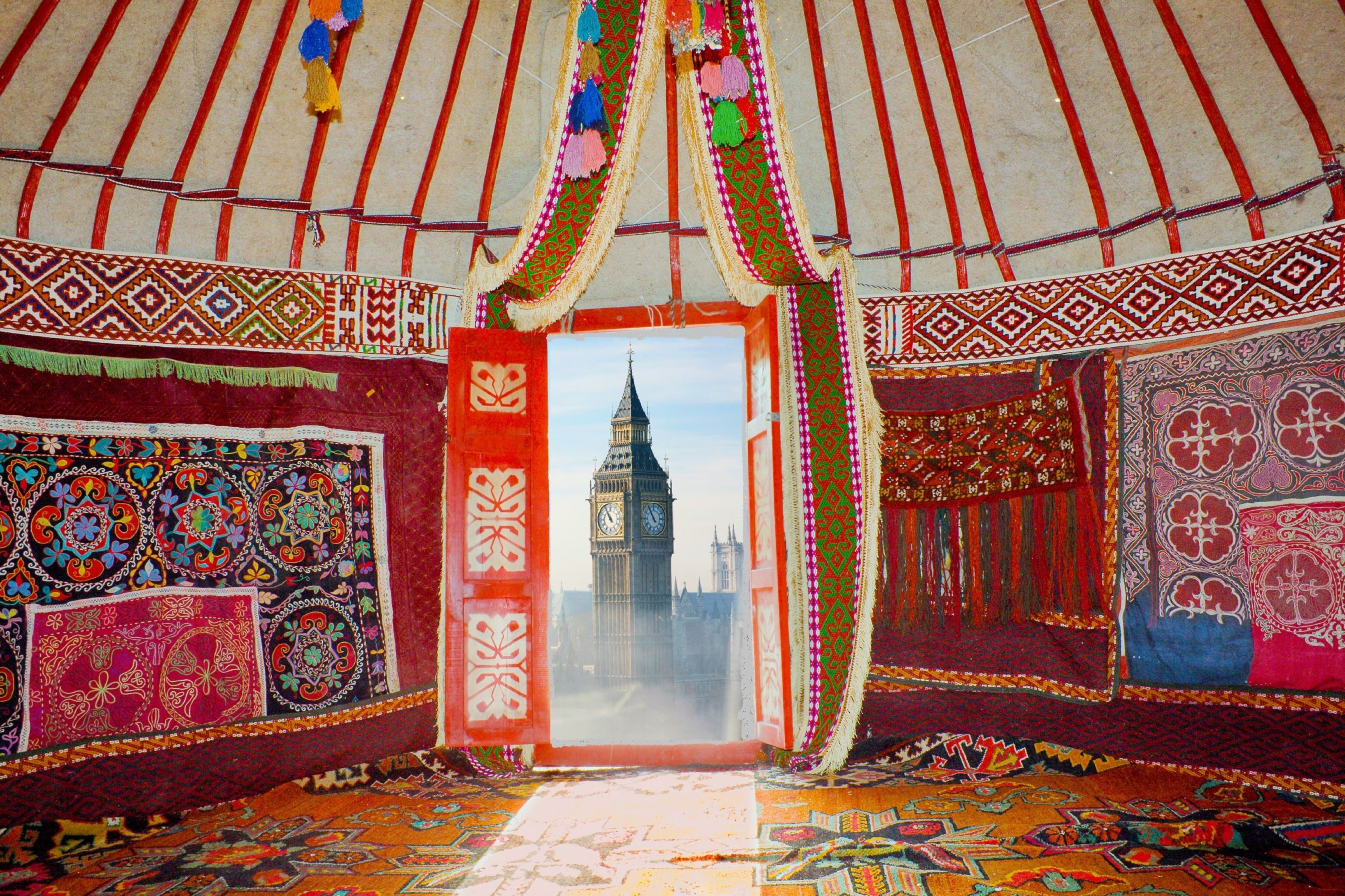
Ұлыбританиядағы Қазақ Орталығы
Kazakh Centre in the UK

How a native of Western Kazakhstan is developing a flower business in London
Her “Kazakh heart” decorated the capital of Great Britain
Author: Tatiana Panchenko, columnist for Forbes Kazakhstan
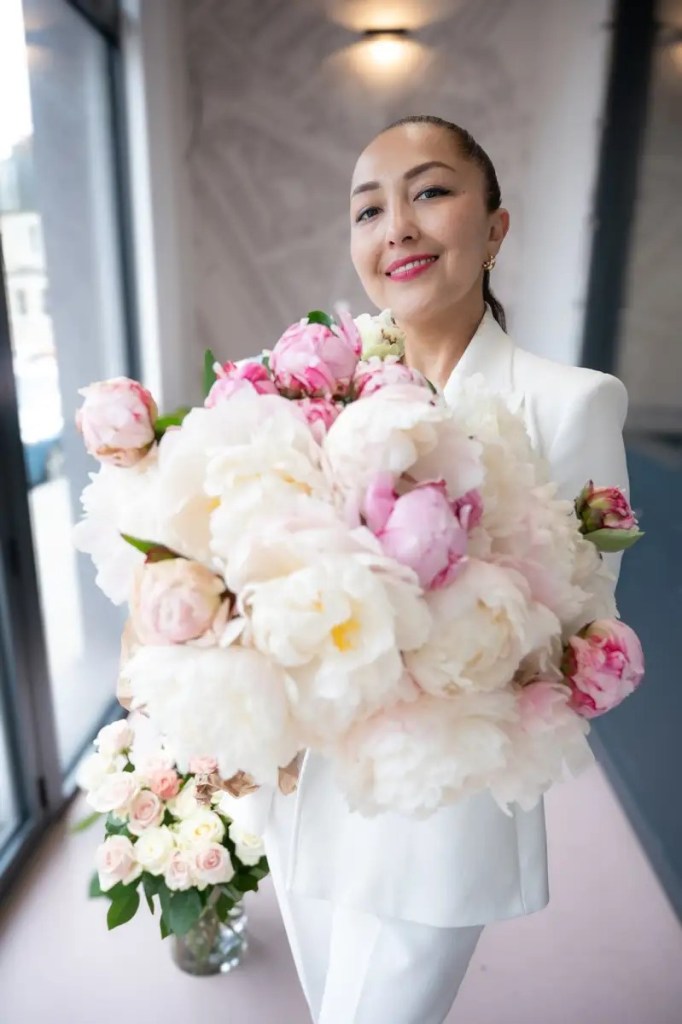
Photo: © Aigerim Kali
Continue
Original article was published in Forbes Kazakhstan in Russian
https://forbes.kz/articles/kak-urozhenka-zapadnogo-kazahstana-razvivaet-tsvetochnyy-biznes-londone
Visitors to the Cultural Style Week festival, held May 21–27 in London, admired a heart-shaped floral panel with a Kazakh national ornament. The decor was displayed on the central walkway where the fashion shows took place.
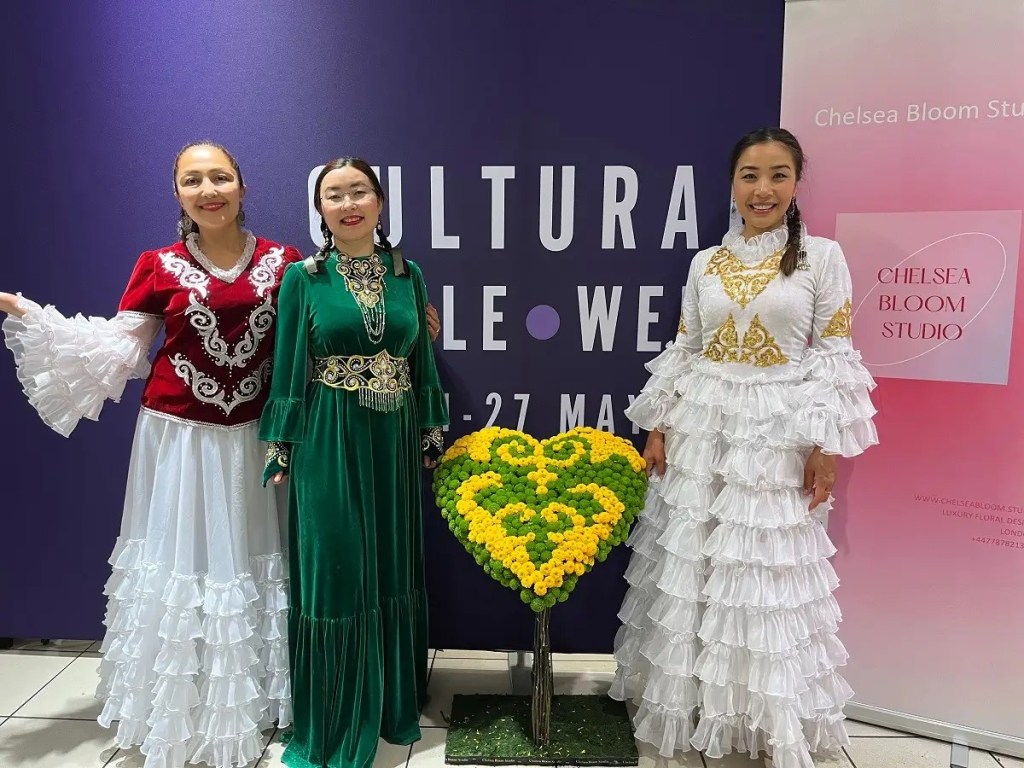
Photo: Bagdat Duskinova
Cultural Style Week is a forum where everyone can demonstrate the cultural heritage of their people through fashion and style. The current festival was opened by Lester Buxton, the mayor of the London borough of Haringey, together with two sisters from Kazakhstan – Medina and Sabrina.
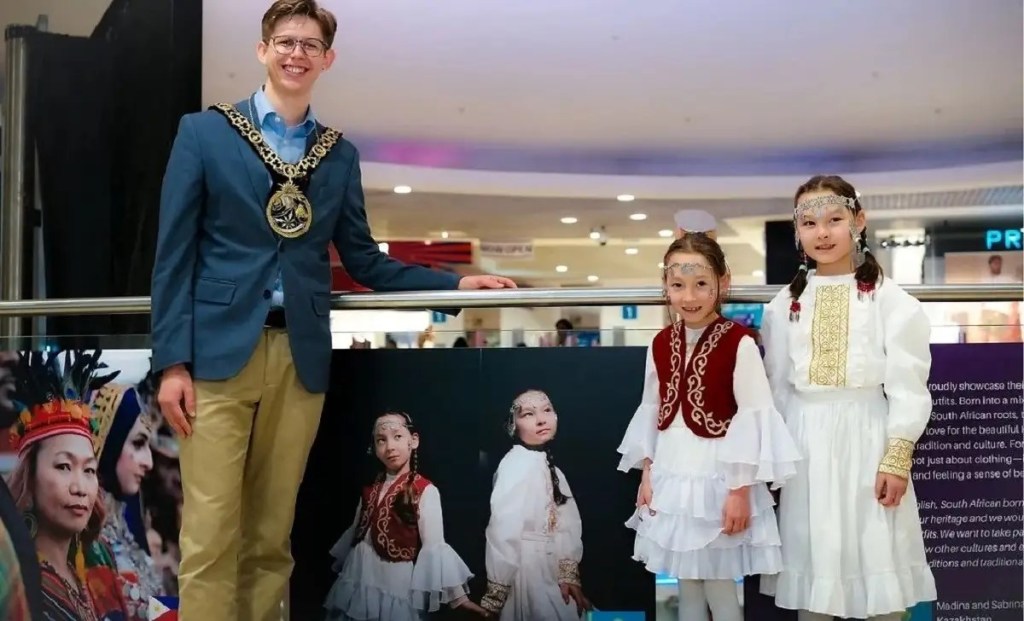
Photo: Haringey Borough website (new.haringey.gov.uk)
The “heart” of fluffy chrysanthemums was prepared by florists of the Chelsea Bloom Studio company, launched by Kazakh Bagdat Duskinova two years ago.
“During this time, judging by the feedback from our clients, we have become one of the reliable and recognizable brands of the flower business in London,” says Bagdat. – We are proud that our clients come to London from other cities in England to pick up our bouquet. We also have a fairly high percentage of clients from various countries, from America and Australia to Africa and Europe, who order bouquets for their loved ones in London. There are also clients from Kazakhstan. In terms of business cooperation, our company has started receiving franchise requests from Kazakhstani companies.
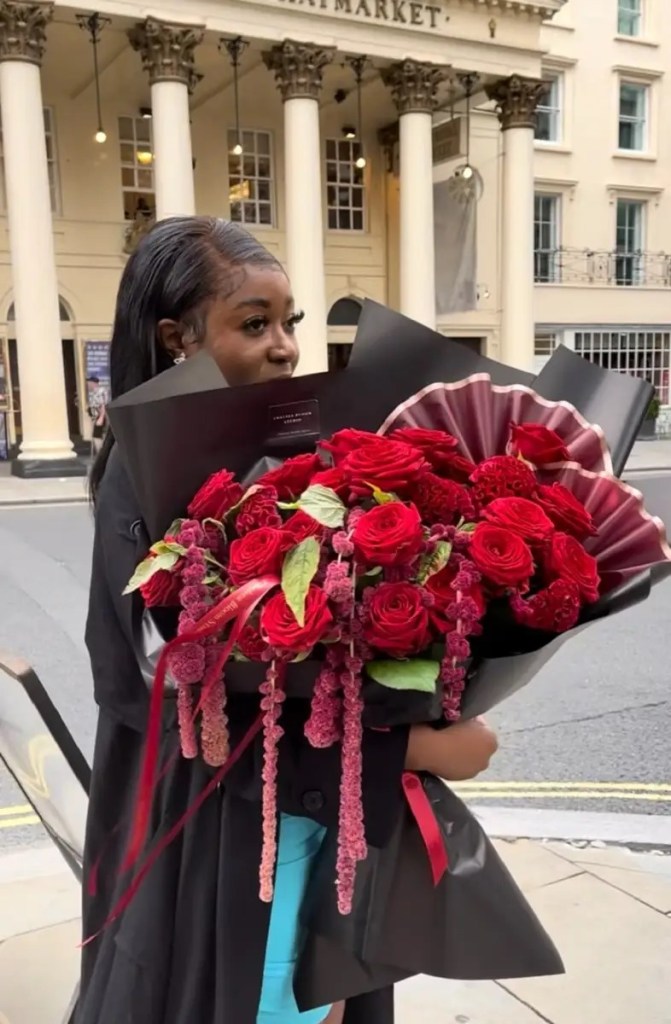
Photo: Bagdat Duskinova
Bagdat was born in the outback of the Ural region – the village of Algabas but managed to enter the Lomonosov Moscow State University at the Faculty of Soil Science, from which she graduated with honours.
“Already at the university I studied landscape design,” recalls Bagdat. – Beautiful natural landscapes during field practice gave free rein to the imagination – after all, nature is very good at combining colours and shapes.
Finding herself in London, where the family moved because of her husband’s work, Bagdat decided to work in a familiar field and got a job at a flower company.
– During my work, I learned a lot of new things and began to understand the London market. And after a year of work, I decided to open my own company,” says the interlocutor. – Started a business practically from scratch. The initial investment – several thousand pounds – went towards renting an office, paying assistants, purchasing tools, supplies and flowers for the first orders.
From the very beginning, the entrepreneur identified the luxury segment for herself. According to her, what helped her gain a foothold in a competitive market was, first of all, attention to the wishes of customers, as well as the accuracy of fulfilling orders on time.
“For example, customers often ask for flowers to be delivered to restaurants at a certain time or home at midnight – in London such services are very difficult to obtain,” explains Bagdat. – Already at the end of the first year of operation, when reporting to the tax authorities, we showed a profit; this year we expect a profit growth of 30-35%.
The company’s bouquets start at £100, so Bagdat’s clientele includes «local celebrities, famous athletes, and upper middle-class people who value good taste, quality and creativity.»
“In addition, we use only the best flowers on the market, we always buy fresh flowers on the day the order is completed, so the prices for them cannot be low,” says the interlocutor.
In addition to selling bouquets, the company also designs events and celebrations, and Bagdat already has several interesting projects in her portfolio.
– We are very proud of grandiose events for major global IT companies in London palaces, where we decorated huge halls throughout the building, for example, in Addington Palace (a mansion built in the 18th century, at one time the residence of the Archbishops of Canterbury, heads of the Anglican Church. – Forbes), says the businesswoman. – We also work with companies in the fashion industry, designing events for jewellery brands, shows during London Fashion Week, including shows by designers from Central Asia.
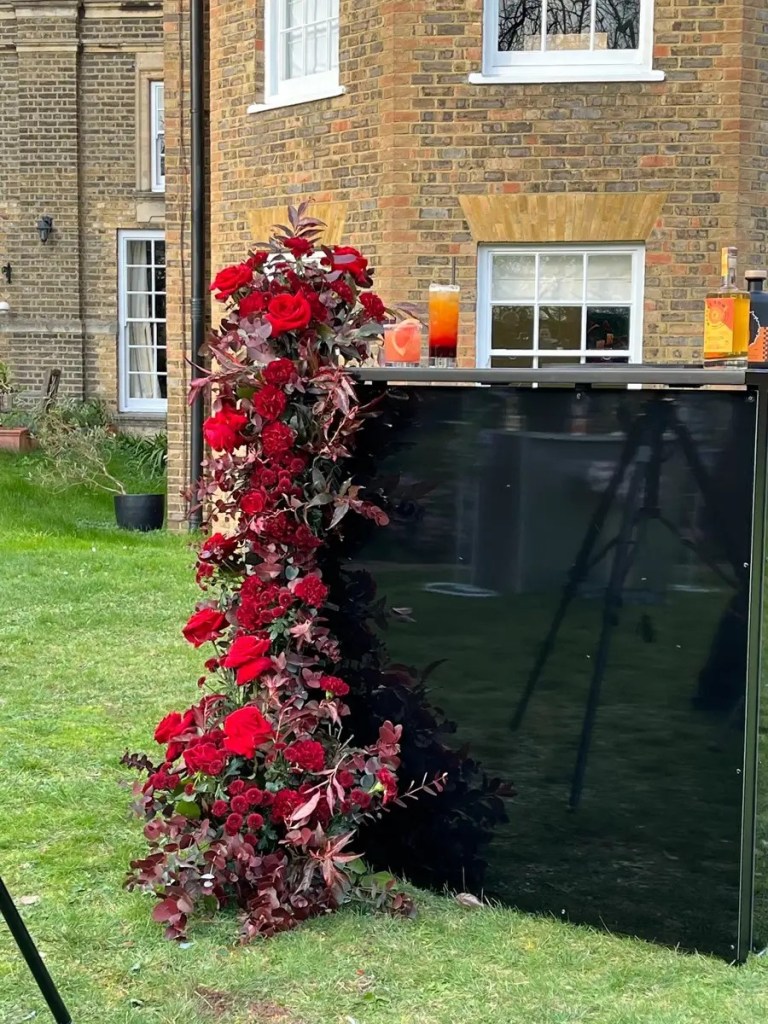
Photo: Bagdat Duskinova
For florists, Bagdat says, it’s always very interesting to design events for private clubs, where celebrities are often members.
– One of these clubs, the National Liberal Club, is located in the very centre of London in a picturesque location on the banks of the Thames. This is an old building with many beautifully decorated rooms. From the portraits of former club members on the walls, you understand what a rich history the club has, where little has changed for centuries,” shares Bagdat. – The trust of such customers is a great honour for us, and great happiness when the client is very satisfied with our work. This reaction makes you want to dance!
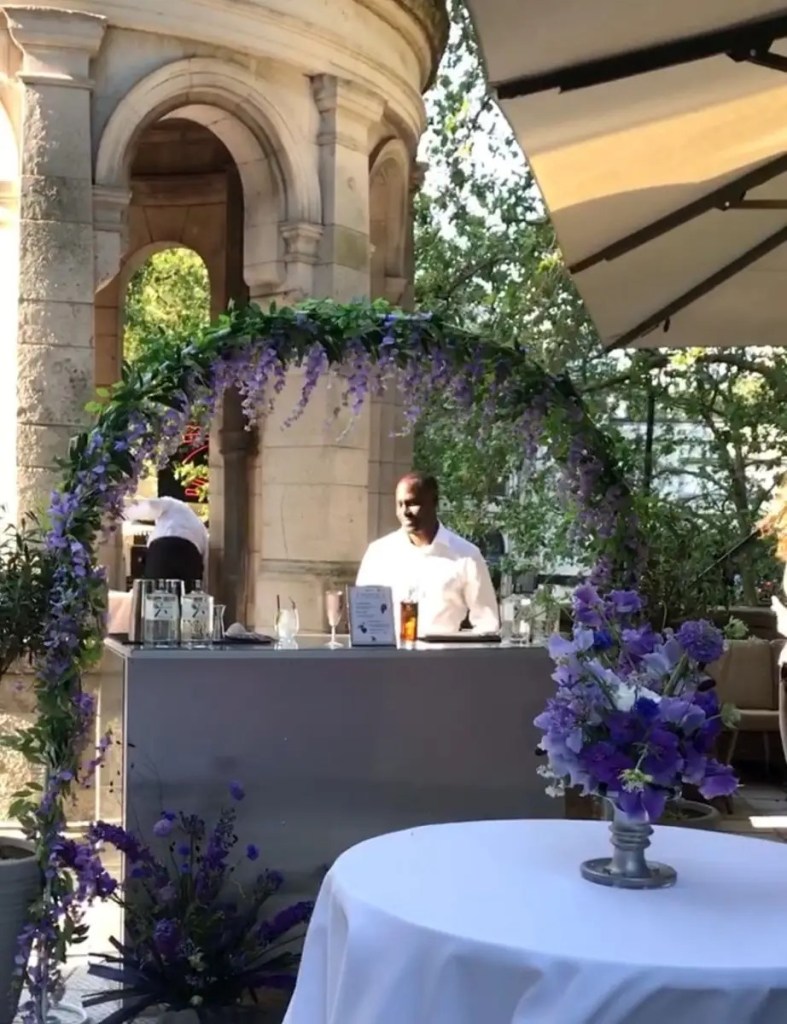
Photo: Bagdat Duskinova
According to the experience of Bagdat Duskinova, the British prefer naturalness in bouquets, choosing wildflowers or those growing in the garden.
– But London is a very cosmopolitan city – people live here who come from all over the world, with different tastes and preferences. For such clients, we make bouquets, for example, in an oriental style, with an Arabic or Chinese flavour,” says the interlocutor. – In this regard, we like to work with custom-made designer bouquets, for example, based on famous films: in the style of James Bond or based on the plots of Tim Burton’s films.
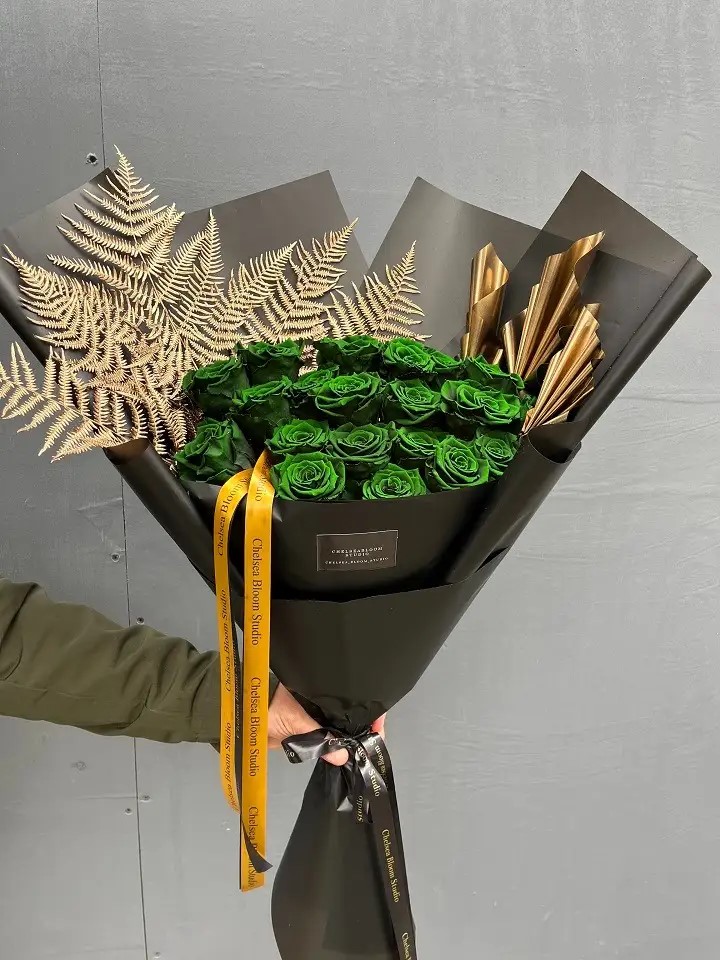
Photo: Bagdat Duskinova
Speaking about business development plans, Bagdat Duskinova recalls the English expression “keep going.”
“It means “keep doing what you’re good at.” We believe that we are succeeding, so we plan to continue our business, grow, develop, and add new models to our portfolio. There is potential for growth by providing flower deliveries across the UK and internationally, she says.
In general, May in London is the month of flowers, the apogee of which is the five-day festival of the Royal Horticultural Society Chelsea Flower Show, held since 1912. This festival is also called the “Great Spring Exhibition”, and members of the British royal family always take part in it.
Although the exhibition takes place on the grounds of the Royal Chelsea Hospital, all of London these days is decorated with floral arrangements, posters of flowers and other floral paintings. Bagdat shared her photos from the current festival.
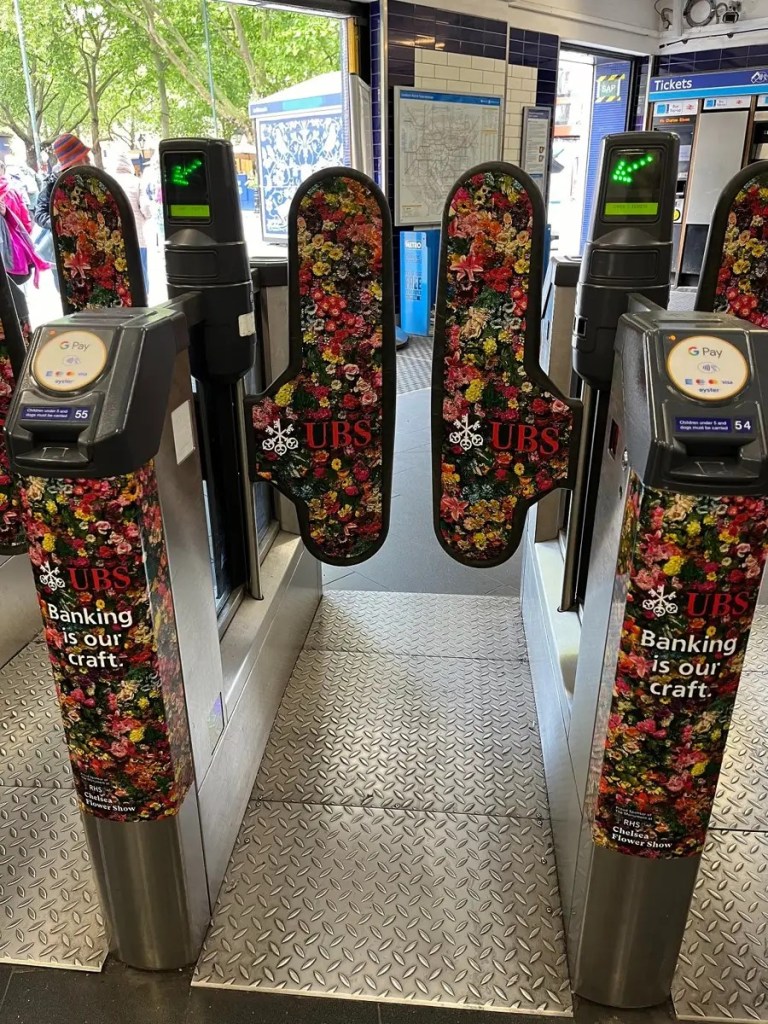
Photo: Bagdat Duskinova
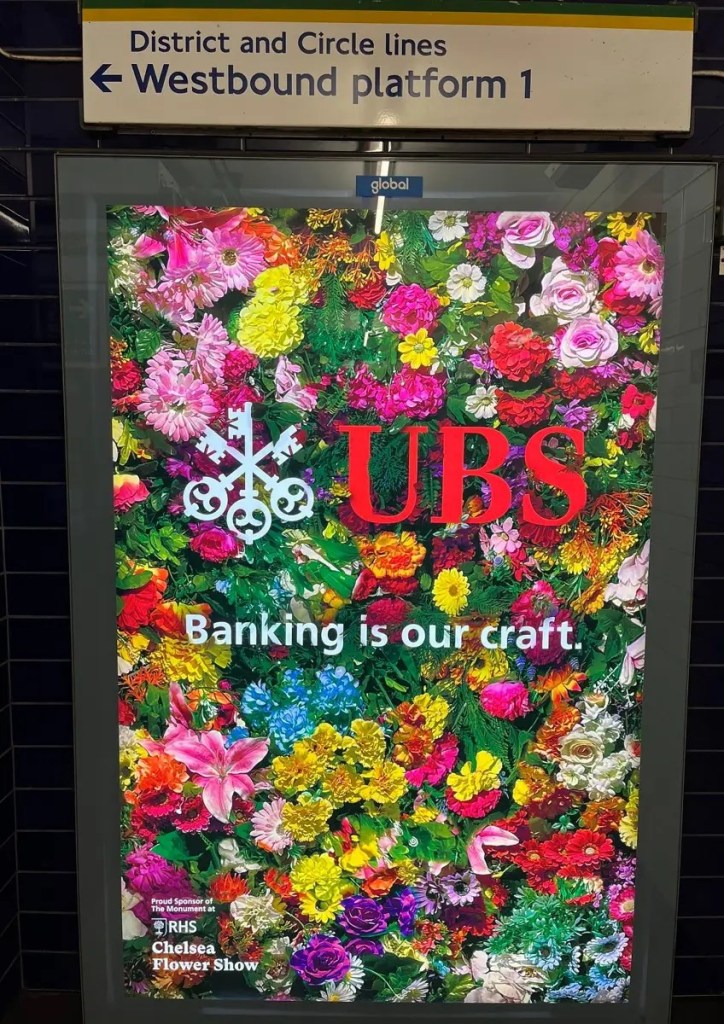
Photo: Bagdat Duskinova
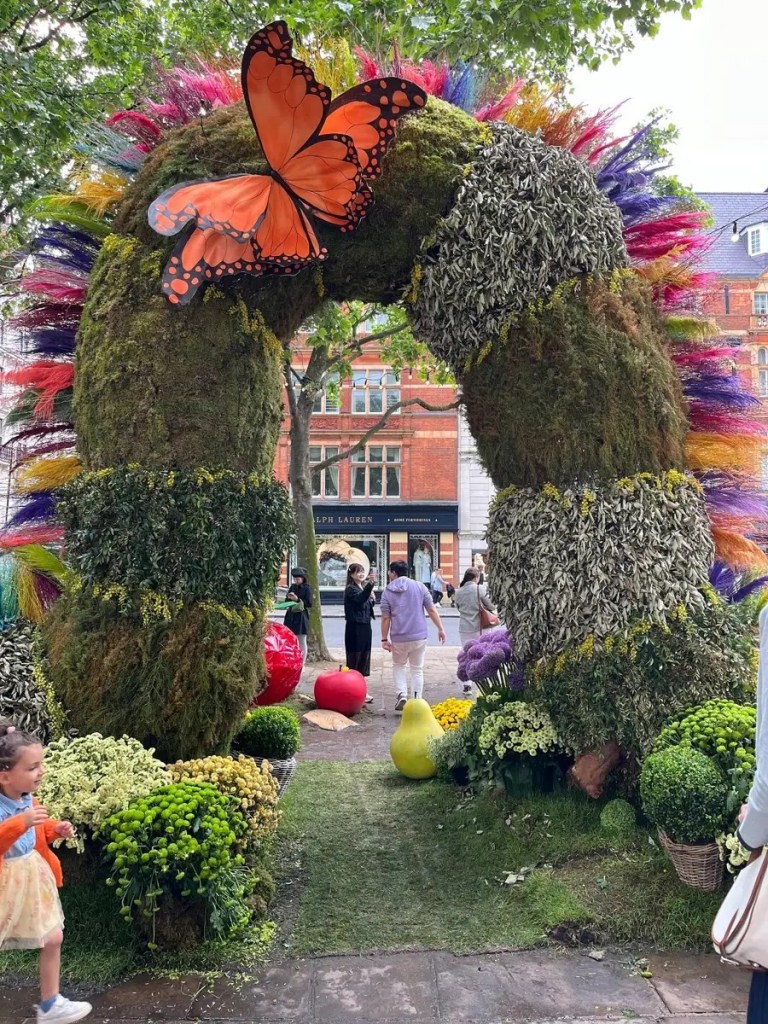
Photo: Bagdat Duskinova
Celebrated Pianist Alim Beisembayev Delivers a Breathtaking Recital at Wigmore Hall
London, United Kingdom – January 5, 2024 – Wigmore Hall was filled with the resonant melodies of classical piano as Alim Beisembayev, a Kazakh pianist of remarkable depth and virtuosity, took to the stage last Friday evening. The concert, supported by the Sir Jack Lyons Charitable Trust, featured a repertoire of Beethoven, Skryabin, Rachmaninov, and Ravel, showcasing Alim’s extraordinary talent.
Fresh from his recent accolades as a BBC New Generation Artist for 2023-25 and as the First Prize winner of The Leeds International Piano Competition in 2021, Alim Beisembayev has been captivating audiences across the globe. His performance at the Royal Albert Hall BBC Proms and his award-winning interpretation of Rachmaninov’s Piano Concerto No.2 have been particularly lauded. Critics from The Guardian have described him as a «worthy winner» with a «real musical personality.»
Alim’s current season highlights his growing stature in the classical music world, with debuts with the BBC Philharmonic and Bournemouth Symphony, and performances of world premieres. His recital at Wigmore Hall added to his impressive list of appearances, which include the BBC Proms at Truro and the Chopin Institute in Warsaw.
An exclusive recording artist for Warner Classics, Beisembayev’s debut album featuring Liszt’s Transcendental Études, released in December 2022, has garnered critical acclaim. Based in London, his artistic journey continues to set an inspiring precedent for classical pianists worldwide. From the community at KazakhUnited, we would like to add that we are immensely proud of Alim. His artistry is not just a testament to his personal dedication but also shines a spotlight on the rich cultural spirit of Kazakhstan. His success serves as a beacon of inspiration for all of us here and back home.
For more information on Alim Beisembayev and his upcoming performances, please visit Alim Beisembayev’s website:
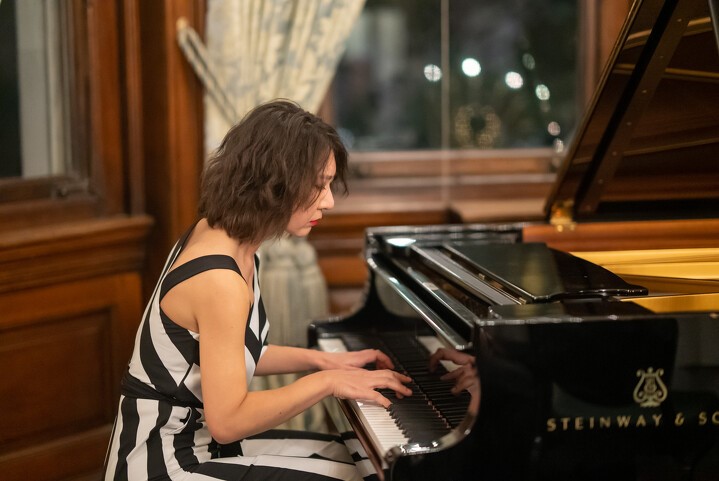
From Almaty’s Concert Halls to the Prestigious Stages of Europe and Beyond -read about Dina Duisen’s Melodious Journey.
Dive into the inspiring story of Dina Duisen, the celebrated Kazakh-British pianist renowned as the «Queen of the Piano».
Celebrated Pianist Alim Beisembayev Delivers a Breathtaking Recital at Wigmore Hall
London, United Kingdom – January 5, 2024 – Wigmore Hall was filled with the resonant melodies of classical piano as Alim Beisembayev, a Kazakh pianist of remarkable depth and virtuosity, took to the stage last Friday evening. The concert, supported by the Sir Jack Lyons Charitable Trust, featured a repertoire of Beethoven, Skryabin, Rachmaninov, and Ravel, showcasing Alim’s extraordinary talent.
Continue
Fresh from his recent accolades as a BBC New Generation Artist for 2023-25 and as the First Prize winner of The Leeds International Piano Competition in 2021, Alim Beisembayev has been captivating audiences across the globe. His performance at the Royal Albert Hall BBC Proms and his award-winning interpretation of Rachmaninov’s Piano Concerto No.2 have been particularly lauded. Critics from The Guardian have described him as a «worthy winner» with a «real musical personality.»
Alim’s current season highlights his growing stature in the classical music world, with debuts with the BBC Philharmonic and Bournemouth Symphony, and performances of world premieres. His recital at Wigmore Hall added to his impressive list of appearances, which include the BBC Proms at Truro and the Chopin Institute in Warsaw.
An exclusive recording artist for Warner Classics, Beisembayev’s debut album featuring Liszt’s Transcendental Études, released in December 2022, has garnered critical acclaim. Based in London, his artistic journey continues to set an inspiring precedent for classical pianists worldwide. From the community at KazakhUnited, we would like to add that we are immensely proud of Alim. His artistry is not just a testament to his personal dedication but also shines a spotlight on the rich cultural spirit of Kazakhstan. His success serves as a beacon of inspiration for all of us here and back home.
For more information on Alim Beisembayev and his upcoming performances, please visit Alim Beisembayev’s website:
How a Kazakh scientist opened the world of Kazakh fashion to the British establishment
December 28, 2023
The project by Almaty native Alma Farmer, «Silk Road Fashion, London,» became part of London Fashion Week
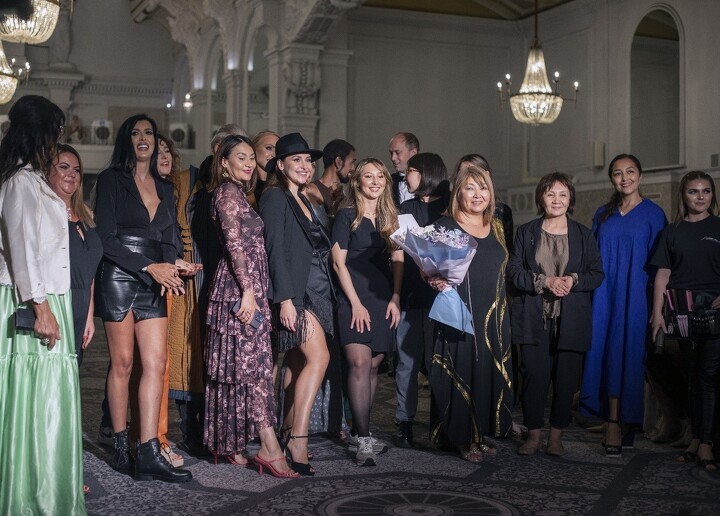
Photo: from personal archive
Continue
Eastern fashion has captivated global interest since the era of the Great Silk Road. Luxuries such as natural felt, sophisticated jewellery, decorative ornaments, and silk itself continue to be coveted in Western fashion. Consequently, the Silk Road Fashion project in London was bound to succeed. However, its founder, Alma Farmer, didn’t initially pursue a career in fashion. After earning her PhD in ecology, she discovered a deeper affinity for creativity. Alma has shared her unique journey to success and how her project became an integral part of London Fashion Week.
Alma was born in Almaty and warmly recalls her childhood. She engaged in a variety of activities including English, figure skating, music, and later swimming and literature, which broadened her outlook. Her parents are well-established in the academic community; her father is a geology professor, and her mother is an associate professor in the Chemistry Department at Kazakh National University.
This article is a translation of the original work published in Russian in «Forbes Kazakhstan».
«Как казахстанский учёный открыла британскому истеблишменту мир казахской моды» author Alena Timofeeva, published on 28 December, 2023 in «Forbes Kazakhstan».
Alma’s grandfather was also a remarkable figure. He was married to the renowned beauty Zhamila, who inspired poems by Magzhan Zhumabaev, a famous Kazakh poet and writer. He was friends with another prominent figure Saken Seifullin, poet, writer, and statesman, and made efforts to rename Akmola (now Astana, the capital of Kazakhstan) to Seifullinsk during its rechristening to Tselinograd, although this was not successful. Working many years in party roles related to metallurgy, he later authored «Non-Ferrous Metallurgy of Pre-Revolutionary Kazakhstan,» a book rich with historical details, such as the ownership of various mines by Dutch and British companies. When Alma first visited London in 1991 with this publication, it immediately piqued interest and is now housed in the library of the University of London, in the School of Oriental and African Studies.
Alma’s grandfather was also a remarkable figure. He was married to the renowned beauty Zhamila, who inspired poems by Magzhan Zhumabaev, a famous Kazakh poet and writer. He was friends with another prominent figure Saken Seifullin, poet, writer, and statesman, and made efforts to rename Akmola (now Astana, the capital of Kazakhstan) to Seifullinsk during its rechristening to Tselinograd, although this was not successful. Working many years in party roles related to metallurgy, he later authored «Non-Ferrous Metallurgy of Pre-Revolutionary Kazakhstan,» a book rich with historical details, such as the ownership of various mines by Dutch and British companies. When Alma first visited London in 1991 with this publication, it immediately piqued interest and is now housed in the library of the University of London, in the School of Oriental and African Studies.
In addition to metallurgy, her grandfather was a scholar of oriental languages and compiled several dictionaries, including the Arabic-Persian-Russian-Kazakh and Persian-Arabic-Russian polytechnic dictionaries. He maintained an expansive library by Soviet standards, which included ancient Arabic texts. Some were so fragile that the pages would crumble to dust at a touch. Young Alma was utterly enchanted by this world. She grew up amidst notes in Arabic penned in her grandfather’s calligraphic hand, inspiring her to dream of studying at one of the oriental language institutes in Leningrad or Tashkent. However, concerns over Leningrad’s harsh winters and the recent earthquake in Tashkent led her mother to dissuade her, prompting Alma to redirect her aspirations.
While Alma did not possess an overwhelming passion for biology initially, it emerged as the most viable option. Her interest eventually veered towards ecology, and she enrolled in the Institute of Occupational Health and Occupational Diseases. Her research focused on the heavy metal pollution in Ust-Kamenogorsk and its accumulation in the organs of deceased residents of Eastern Kazakhstan. During that time, industrial and economic development were ruthlessly pursued to meet the objectives of five-year plans, often at the expense of public health. Consequently, her studies were either stamped «for official use» or published in specialized scientific journals, often omitting the name of the city.
Alma also delved into the issues affecting the Aral region, focusing particularly on the physical development of children and its correlation with social and economic factors. Her work caught the attention of the University of London in 1991, a significant period marked by Princess Anne’s (the sister of the Charles III, the King of the United Kingdom) involvement in children’s health and her visit to Kazakhstan. The British delegation provided Alma with her first laptop and funding for her continued research. This support was notably impressive and timely, coinciding with the nascent days of independence.
For the young specialist, England was the first destination after the fall of the Iron Curtain — and it was love at first sight. Alma found herself mesmerized by the cosmopolitan atmosphere of London, its rich diversity of ideas, and the freedom of thought and expression. For five years, she lived between Almaty and London. In 1996, at a conference in Turkey, she met English ecologist Andrew Farmer, who later became her husband. Their marriage cemented her decision to move. «For 26 years, we have never had a quarrel. Everything just fell into place — family, work, environment. So, you could say the country itself chose me,» Alma recounts with a smile.
When questioned about her transition from environmentalism to the fashion industry, Alma explains that it was a natural progression. She notes that it’s often the reverse — individuals from the fashion world delve into ecology to understand fabric and dye production better and minimize the environmental impact of their work. These two fields are closely intertwined, given that clothing production is one of the significant contributors to environmental pollution. Alma expresses optimism about the gradual global shift towards eco-fashion, a movement gaining momentum in the industry.
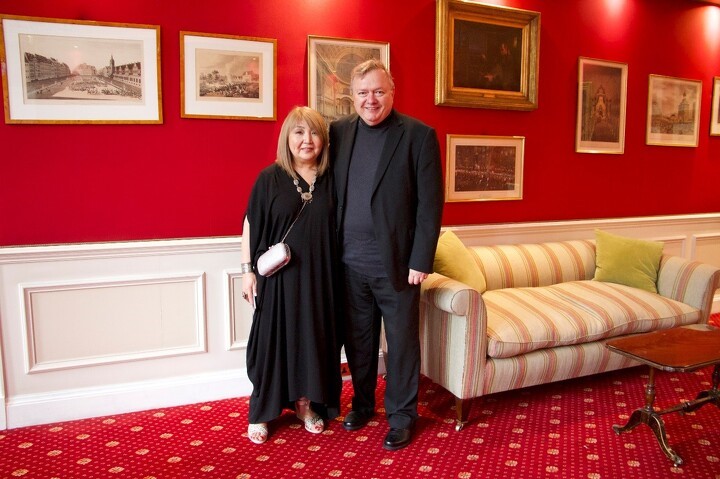
Photo: from personal archive
Upon settling in England, Alma gradually shifted her focus away from science and became a consultant for the World Bank in Central Asia. The role involved frequent business trips, providing ample free time, which she joyfully dedicated to exploring art. This sparked the idea of introducing traditional Asian crafts to the British audience.
During a winter business trip to Kyrgyzstan, Alma found herself in a frigid, unheated barracks in the mountains, observing women making felt—a process made arduous by the cold, as steam rose in the chilly air and their hands reddened with effort. Witnessing the craftswomen’s toil, Alma felt a strong conviction that their work deserved international recognition. Concurrently, the Embassy of Kazakhstan in the UK was participating in the charity exhibition, patronized by Princess Alexandra, cousin of the Queen Elizabeth II, with proceeds benefiting children in Africa. Inspired, Alma began transporting felt and silk creations from Kazakh artisans to these exhibitions, further bridging the gap between Central Asian craftsmanship and Western appreciation.
In the 1990s, Central Asian culture was somewhat of a novelty in London, despite the presence of the Bekova (Nakipbekova) sisters, Bulat Ayukhanov’s theatre tours, and the import of Kazakh films and paintings. General knowledge about Kazakhstan was limited, with most people aware only of its status as a former Soviet republic, its natural resource wealth, and the location of Baikonur. However, in England—a country with a history of vast empire—Asian art was already well recognized. The British historically felt a closer connection to Indians than to Eastern European Slavs, and London boasted a vibrant Chinatown with oriental restaurants, souvenir shops, and grand Chinese New Year parades. There were also centres dedicated to Japanese art and institutions like Asia House, hosting regular exhibitions and events related to Eastern countries.
Alma, in this context, was a pioneer in introducing handicrafts from Central Asia to the British market. The unique appeal of silk scarves adorned with felt captured the British imagination. Notably, the wives of military attachés from various countries, accustomed to the wonders of the world, were particularly taken with the unusual offerings of Kazakh artisans, eagerly placing orders for these distinctive products. Alma’s initiative not only filled a niche but also expanded the cultural bridge between Central Asia and the West.
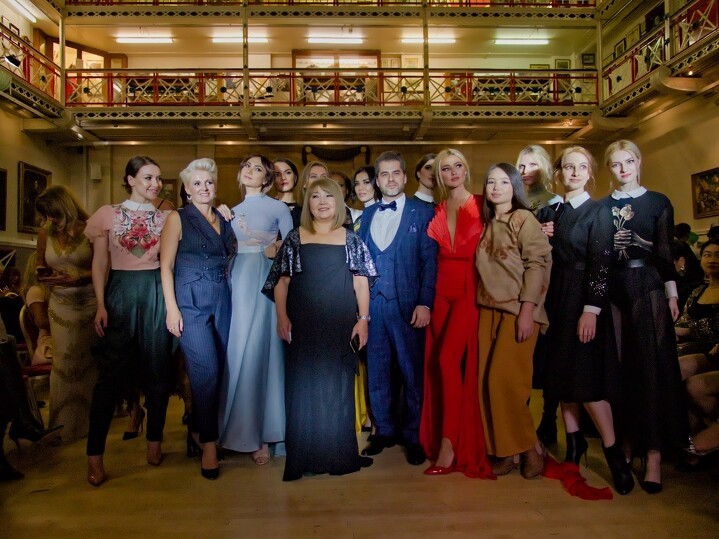
Photo: from personal archive
The endeavour to promote artisans gradually became more streamlined, transforming Alma into a creative producer. Her result-oriented mindset and ability to manage projects and engage people proved invaluable. As the network expanded, designers placing orders became involved. One such designer, a Serbian friend of Alma’s, proposed the idea of the «Year of the Silk Road,» planning various format events under this theme. Alma was invited to host a fashion show. This is how “Silk Road Fashion, London” arose — an international show that became the face of Central Asian fashion and the fashion of the countries of the Great Silk Road, laid from Asia to Europe two thousand years ago.
«The ‘Silk Road Fashion, London’ project is now officially affiliated with the British Fashion Council, the primary organizer of London Fashion Week. This city stands alongside Paris, New York, and Milan as one of the four fashion capitals of the world. For any designer, breaking into the London fashion scene is a significant achievement due to the stringent and competitive nature of the industry. Entry is challenging for several reasons: the high costs of participation, the requirement for a designer’s products to be sold in at least five of their stores—which can be a substantial financial burden.
Additionally, it’s crucial for the British Fashion Council to promote its own designers, as the event attracts press and buyers globally.
Fashion Week serves as a platform offering a tremendous opportunity for creative expression. Notably, British designers are also keen to participate in the «Silk Road Fashion, London» shows, which is why one of the brand’s slogans is “From the Great Silk Road to your doorstep.”
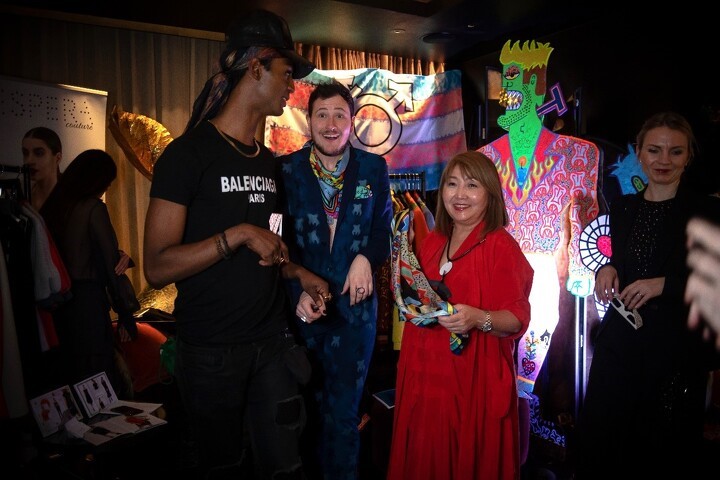
Photo: from personal archive
According to the United Nations, the Silk Road encompasses 40 countries, extending from China to Italy. «Silk Road Fashion, London’s» primary mission and strategy is to display the diverse fashion existing along this historic route: be it traditional, avant-garde, or a fusion of styles. Fashion is a reflection of culture, embodying ancient traditions and contemporary trends to create a unique and compelling blend.
As a member of the British Fashion Council, «Silk Road Fashion, London» distinguishes itself from typical fashion shows. The brand gains access to a network of the world’s leading press, including Forbes, and buyers (both large malls and boutiques, since many produce limited-edition haute couture collections).
Typically, attendance at the official shows of London Fashion Week is by invitation only, drawing an audience of fashion professionals, celebrities, media representatives, and potential buyers. If the brand hosts its show in a large venue, tickets might also be sold to allow fashion enthusiasts to witness the latest trends. For individual designers, it is often easier and more beneficial to showcase their work through a platform like «Silk Road Fashion, London» than to organize a show independently. The work of five to eight pre-selected designers is showcased throughout the evening.
Alma emphasizes that “Silk Road Fashion, London” is also interesting for sponsoring companies that want to make themselves known to the international community in London, so they are open to cooperation.
Photo: from personal archive
The brand has no problems with demand. Last year, «Silk Road Fashion, London» collaborated with Madeira Fashion Weekend, and received invitations to conduct fashion shows in Istanbul, Paris, and other cities. However, Alma has declined these offers for now due to the logistical complexities and high costs of selecting and transporting models to foreign countries. Recently, she accepted an invitation to participate in the British Film Festival Awards Show 2023, a prestigious event where filmmakers will be scouting for costume designers for their films. For this occasion, Alma has invited Nazym Karpikova, a Kazakh designer with experience in cinematography, to participate. Looking ahead, Alma hopes to attend the Cannes Film Festival next year with a similar objective, further expanding the brand’s influence and opportunities within the international film and fashion industries.
It may seem that a fashion show is solely about the clothes, but in reality, it requires meticulous planning and preparation of many elements: the venue, models, makeup artists, stylists, photographers, videographers, and the guest list. Sometimes, despite careful planning, last-minute issues arise. Yet, the fashion industry is resilient and adaptable. For instance, during the Covid-19 pandemic, many shows transitioned to an online format. For her exceptional adaptation and execution during these challenging times, Alma was honoured with the title of «Best International Fashion Show Producer» of 2021 by Chicago magazine, a media partner of the Oscar film award’s “Who’s Who on the Red Silk Carpet”.
In addition, in 2022, during the celebration of the platinum anniversary of the reign of Queen Elizabeth II, one of the members of the House of Lords of the British Parliament emphasized the importance of promoting the culture of ethnic minorities and, through the Chingiz Aitmatov Academy in London and its director Rakhima Abduvalieva, awarded five people with royal anniversary medals, including our Alma.
It’s worth noting that London Fashion Week has significantly expanded in recent years. Alma is acquainted with one of its founders, Lynne Franks OBE, who was also instrumental in establishing the British Fashion Council. Initially, according to Lynne, celebrities like Princess Diana and Sir Elton John graced the first London Fashion Week shows. Nowadays, alongside the official events, numerous unofficial shows take place throughout the city. With the expanding influence of «Silk Road Fashion, London,» Alma observes an increase in competition. However, she believes in collaboration rather than rivalry, emphasizing that each designer occupies a unique niche and will attract their specific audience.
Alma finds her inspiration in people – particularly strong personalities and historical figures who have left a significant cultural legacy. Among her favourite artists are Toulouse-Lautrec and Kandinsky, as well as Renaissance masters and fashion icons like Yohji Yamamoto and Dame Vivienne Westwood, celebrated for their originality. For her creative fuel, Alma often visits galleries and theatres, finding that ideas spontaneously emerge in these artistic spaces. She also finds that West End musicals can offer novel perspectives and solutions for fashion shows, indicating a continual interplay between different forms of art and her work.
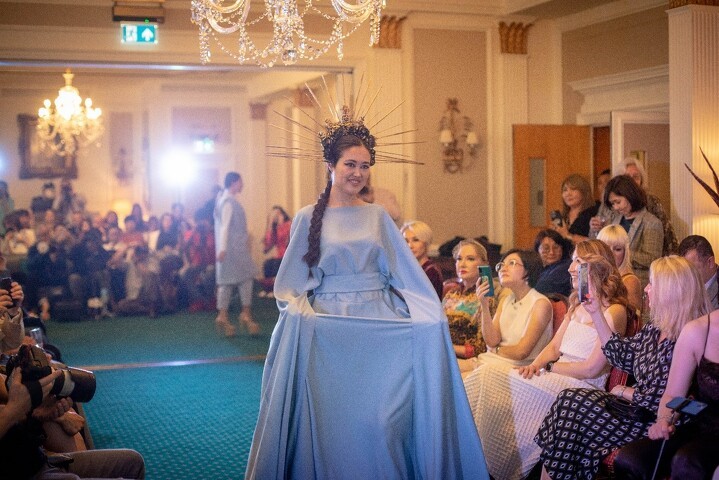
Photo: from personal archive
Alma does not plan to return to science, although she once pursued her Ph.D. with great enthusiasm, defending her thesis back in 1991. She’s now in love with her current work, finding immense joy in interacting with creative individuals, which provides a significant boost. Her residence in England offers a plethora of friends from around the world, and she cherishes the country’s diverse events, vibrant activities, cosmopolitan nature, and equal opportunities for all. She believes that in England, if you work passionately and pour your soul into your endeavours, success is attainable, regardless of your background.
Alma often reminisces and visits her homeland, spending time with her parents and childhood friends. Additionally, after several years in Kazakhstan, her son and his family have moved back to London, bringing a piece of their country with them. Kazakh designers frequently collaborate with Silk Road Fashion, London. In 2022, to commemorate the 30th anniversary of independence and the establishment of diplomatic relations between Great Britain and Kazakhstan, a fashion show was hosted at the prestigious closed club, «The RAG — Army & Navy Club,» once affiliated with the late Prince Philip. Seven talented Kazakh designers showcased their works in an event supported by the Embassy of Kazakhstan in the UK and sponsored by Dr. Reza Tabrizi, a member of the secretariat of the «All-Party Parliamentary Group in the UK» of the British Parliament and a club member.
Despite her success and content life abroad, Alma confesses she has retained her Kazakh passport and did not apply for a British one, even though she’s been eligible for over 20 years. For her, renouncing her homeland’s citizenship is challenging; the familiar blue passport cover continues to warm her soul.
This article is a translation of the original work published in Russian in «Forbes Kazakhstan».
«Как казахстанский учёный открыла британскому истеблишменту мир казахской моды» author Alena Timofeeva, published on
28 December, 2023 in «Forbes Kazakhstan».
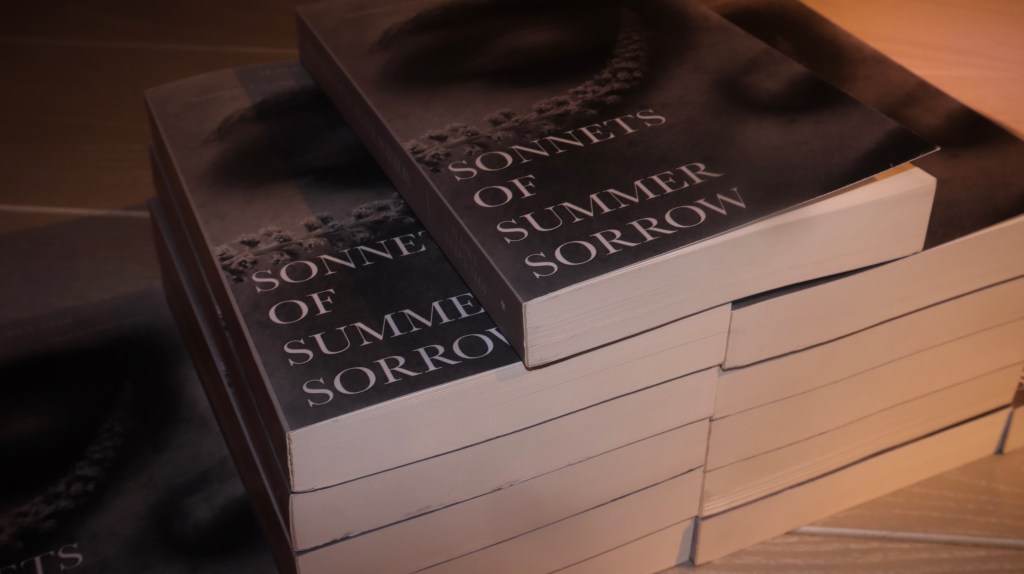
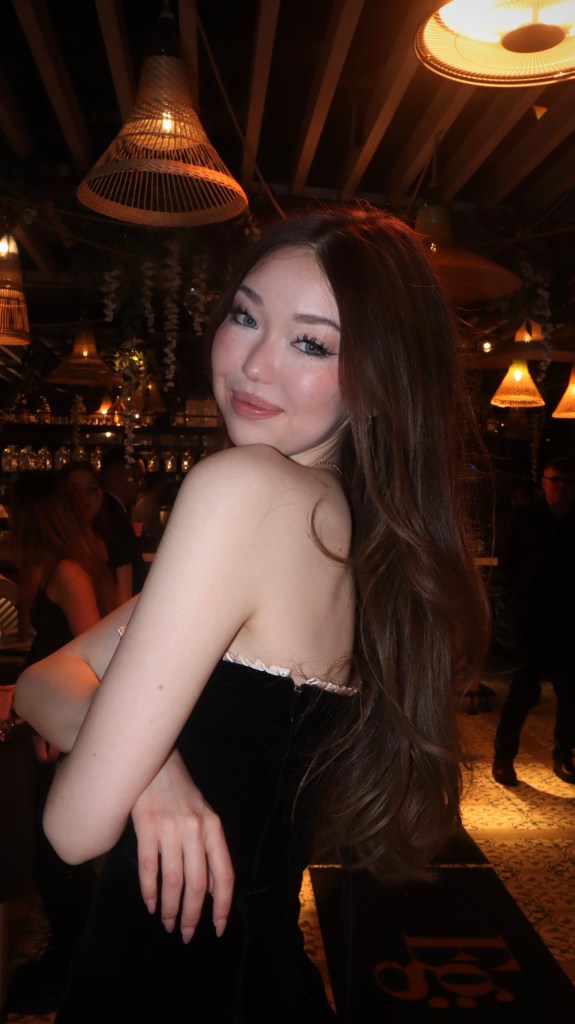
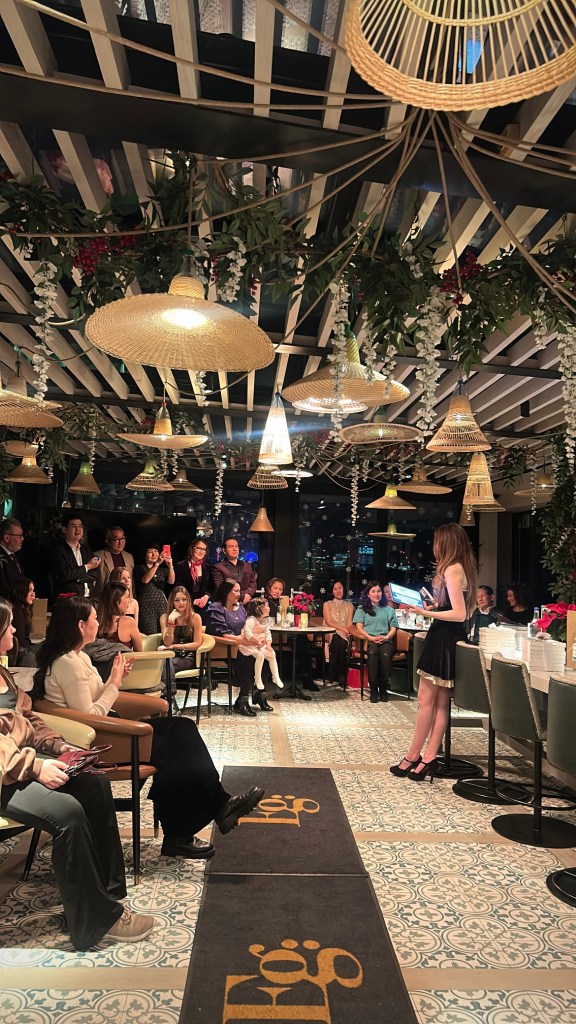
The presentation of the first book of the young Kazakhstani writer Ayaleem Alaska Tuken Tegi «Sonnets of Summer Sorrow » was held in London on 9 November 2023.
Continue
18-year-old Alaska Tuken Tegi has unveiled her first book to guests who gathered for the evening.
«Sonnets of Summer Sorrow» is a poignant narrative set against the backdrop of centuries-old libraries of Oxford. The protagonist, Alaska Greenwood, embarks on a journey of rediscovery following a traumatic past. She finds herself in an Oxford summer course, seeking solace and reconnection with her love for literature. It’s here that she meets Theodore, an enigmatic fellow student whose presence ignites an exploration of forbidden desires, intellectual pursuits, and the relentless quest for self-acceptance.
This dark academia tale delves deep into the complexities of human emotions, weaving a narrative that is both enthralling and heart-wrenching. As Alaska and Theodore navigate their intoxicating connection, they face a harrowing truth that threatens to tear apart their bond as quickly as it was formed. The book promises to leave readers spellbound, pondering the inevitability of incomplete narratives in life.
Alaska Tuken Tegi’s debut is not just a story; it’s an experience that captures the essence of youthful longing and the painful pursuit of self-discovery. Her ability to articulate deep, often unspoken emotions through her poetic prose is a testament to her remarkable talent at such a young age.
The book is available for purchase in Kindle Edition on Amazon. Readers are invited to immerse themselves in the captivating world of Alaska Greenwood and discover the beauty and sorrow of her summer sonnets.
Mailing
Subscribe to receive information
Создано на WordPress.com
 KazakhUnited